
Need ideas, inspiration or practical planning tips?
Browse our other articles to find the best way to include your dog in your wedding, from ceremony roles to outfits, safety tips and more.
With the right training and planning, many dogs can successfully become an unforgettable part of your wedding celebration. In this guide, we'll walk through everything you need to know to prepare your dog for their big role in your wedding party.
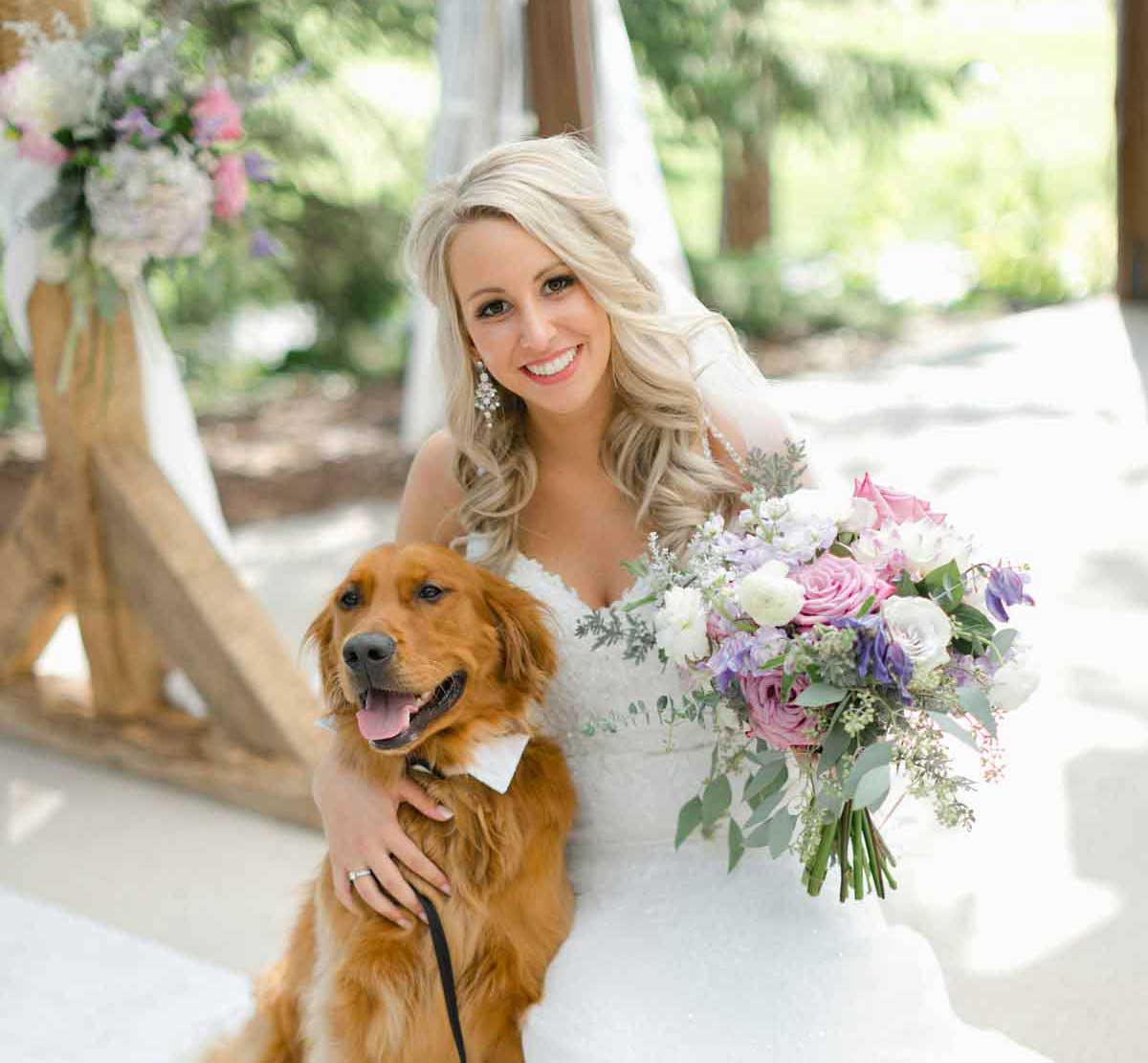
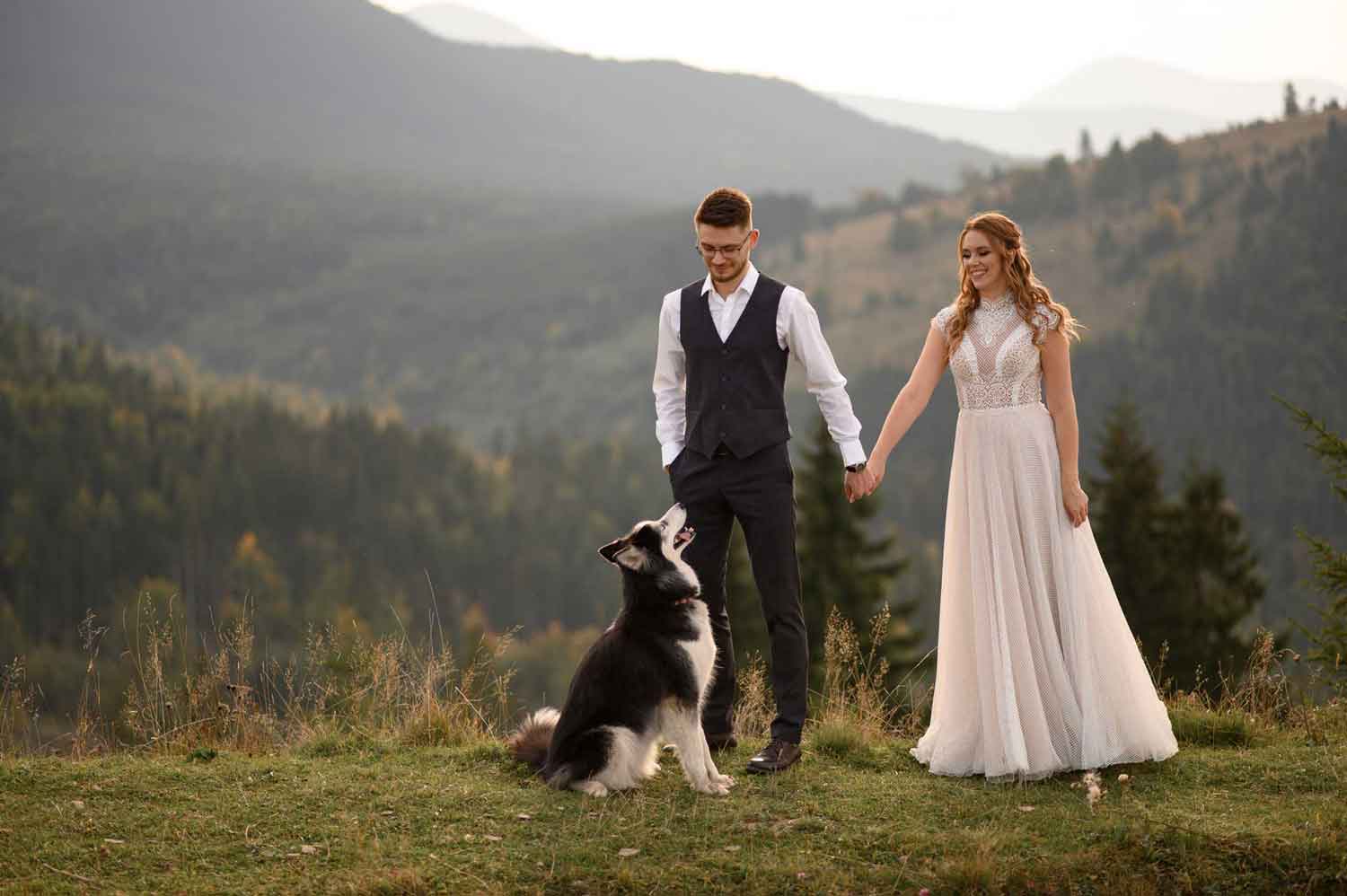
For many couples, a dog isn't just a pet — they're family. They've been there through life's biggest moments, from moving house and career changes to engagements and growing families. It's no surprise that more and more couples want their furry companion to be part of their wedding day.
Whether you dream of your dog walking down the aisle, serving as a ring bearer, posing for wedding photos or simply greeting guests, some preparation is essential. Weddings are exciting but highly stimulating environments filled with unfamiliar people, noises, smells and distractions. Even the most well-behaved dog can become overwhelmed if they aren't properly prepared.
Before beginning any training, it's important to honestly assess your dog's temperament.
Not every dog enjoys large gatherings, and that's perfectly okay.
Ask yourself:
A wedding day can be overwhelming for nervous, reactive or highly excitable dogs. If your dog struggles in crowded environments, it may be kinder to include them in photos only or celebrate them in other ways throughout your wedding.
Remember: your dog's wellbeing should always come before any wedding-day plans.
Ideally, begin wedding-specific training at least three to six months before your wedding date.
While many dogs already know basic commands, weddings require a higher level of reliability due to the number of distractions involved.
Focus on strengthening:
Your dog should be able to sit calmly and remain seated even when people are moving around them.
A solid stay command is one of the most important skills for wedding dogs. You'll likely want your dog to stay in position during photos, the ceremony or while guests interact with them.
Reliable recall can help prevent stressful situations if your dog becomes distracted or excited.
This command can be a lifesaver around dropped food, decorations, flowers and wedding favours.
Walking calmly beside a handler is essential if your dog will be part of the processional.
Practise these commands regularly in different locations rather than only at home.
Your dog may perform perfectly in your backyard but struggle when surrounded by 100 guests.
Training should gradually include distractions similar to those they'll encounter on your wedding day.
Try practising in:
Expose your dog to:
Reward calm behaviour with praise and treats.
The goal is to teach your dog that exciting surroundings don't mean they need to become overly excited themselves.
If your dog will be walking down the aisle, don't wait until the wedding rehearsal to practise.
Create a mock aisle at home or in a local park.
Ask friends or family members to stand on either side while your dog walks through the middle.
Practise:
Start with short distances and gradually build confidence.
Some dogs may be happiest walking alongside a bridesmaid, groomsman or dedicated dog handler rather than independently.
Many couples focus heavily on ceremony training but forget about photography.
Wedding photographers often need dogs to:
Practise posing sessions at home. Use treats, favourite toys and positive reinforcement to reward cooperation.
Keep sessions short and fun – a dog that enjoys the experience will photograph much better than one that feels pressured.
If your dog will be wearing a tuxedo, bow tie, floral collar, bandana or dress, introduce it well in advance.
Never put wedding attire on your dog for the first time on the wedding day.
Start by:
Watch for signs of discomfort such as:
Comfort should always come before appearance.
For many dogs, a simple bow tie or floral collar is more comfortable than a full outfit.
If possible, take your dog to the wedding venue before the big day.
This allows them to:
A venue visit can significantly reduce anxiety on the wedding day.
Practise walking through ceremony areas and key photo locations – the more familiar the environment feels, the more relaxed your dog is likely to be.
Browse our other articles to find the best way to include your dog in your wedding, from ceremony roles to outfits, safety tips and more.
A rehearsal isn't only useful for humans.
If your venue allows it, include your dog in the rehearsal process.
This gives everyone the opportunity to practise:
You'll quickly identify any challenges before the wedding itself.
One of the biggest mistakes couples make is assuming a family member can casually watch the dog throughout the day.
On your wedding day, everyone will be busy so a wedding dog chaperone is essential.
Their responsibilities may include:
Some couples hire professional wedding pet attendants who specialise in dog-friendly weddings while others choose a trusted friend who knows the dog well.
Either option can work successfully.
Even well-trained dogs can have off days.
Create backup plans for situations such as:
Have a quiet area available where they can relax away from guests.
A dog chaperone can simply walk them through or adjust plans accordingly.
Allow them to leave early rather than forcing participation.
Prepare covered areas or indoor alternatives.
Flexibility is key – some of the most memorable wedding moments happen when dogs behave exactly like dogs.
Pay attention to your dog's body language throughout the day.
Signs of stress can include:
If you notice these signs, allow your dog to rest somewhere quiet.
A shorter, positive experience is always better than an extended stressful one.
Not every dog needs to be a ring bearer – consider roles that suit your dog's personality.
Walks down the aisle carrying decorative rings.
Accompanies the flower girl or carries floral decorations.
Wears a special bandana or bow tie and stands alongside the wedding party.
Sits quietly during the ceremony.
Appears in portraits without attending the entire event.
Welcomes guests before the ceremony.
Choose a role based on your dog's comfort level rather than what's most photogenic.
How far in advance should I start training my dog for my wedding?
Ideally, begin training three to six months before your wedding. This provides enough time to strengthen obedience skills and gradually introduce wedding-style distractions.
Can any dog be part of a wedding?
Not necessarily. Dogs that are highly anxious, reactive or uncomfortable around crowds may find weddings stressful. Consider your dog's temperament before making plans.
Should my dog attend the reception?
Most dogs cope best with the ceremony and photos only. Receptions can be noisy, crowded and overwhelming.
Do I need a professional dog handler?
While not essential, a professional wedding dog chaperone can make the day much easier by focusing entirely on your dog's needs.
What should my dog wear to a wedding?
Comfortable options such as bow ties, floral collars, bandanas or lightweight tuxedo harnesses are popular choices. Avoid anything restrictive or uncomfortable.
What if my dog doesn't behave perfectly?
That's completely normal. Dogs are living, breathing members of the family, not performers. Focus on creating a positive experience rather than expecting perfection.
Should my dog carry the real wedding rings?
Most wedding professionals recommend using decorative rings or empty ring boxes. Keep the real rings with your best man, celebrant or another trusted person.
How can I keep my dog calm on the wedding day?
Provide plenty of exercise beforehand, maintain familiar routines, bring favourite toys and treats, and ensure they have access to quiet spaces throughout the day.
Including your dog in your wedding party can create some of the most meaningful memories of your entire wedding day.
With early preparation, realistic expectations and plenty of positive reinforcement, your dog can confidently take part in your celebration while remaining happy, safe and comfortable.
Remember that success doesn't mean perfection. Your dog doesn't need to execute every command flawlessly. The goal is simply for them to enjoy being part of your special day.
After all, those little moments of personality are often what make wedding memories so unforgettable.
Every couple is different, and so is every dog. Take a look around, explore our guides, and discover the best ways to celebrate your love – together with your furry family.
Explore more guides, tips and inspiration to help you create the perfect dog-friendly wedding day.